
What Is OPD Cover in Health Insurance? Benefits, Coverage & How Cashless OPD Works
OPD cover helps you manage everyday healthcare expenses such as doctor consultations, diagnostic tests, prescribed medicines, dental and vision check-ups. Learn how OPD coverage works, what it covers, its benefits, and how cashless OPD can make healthcare simpler.
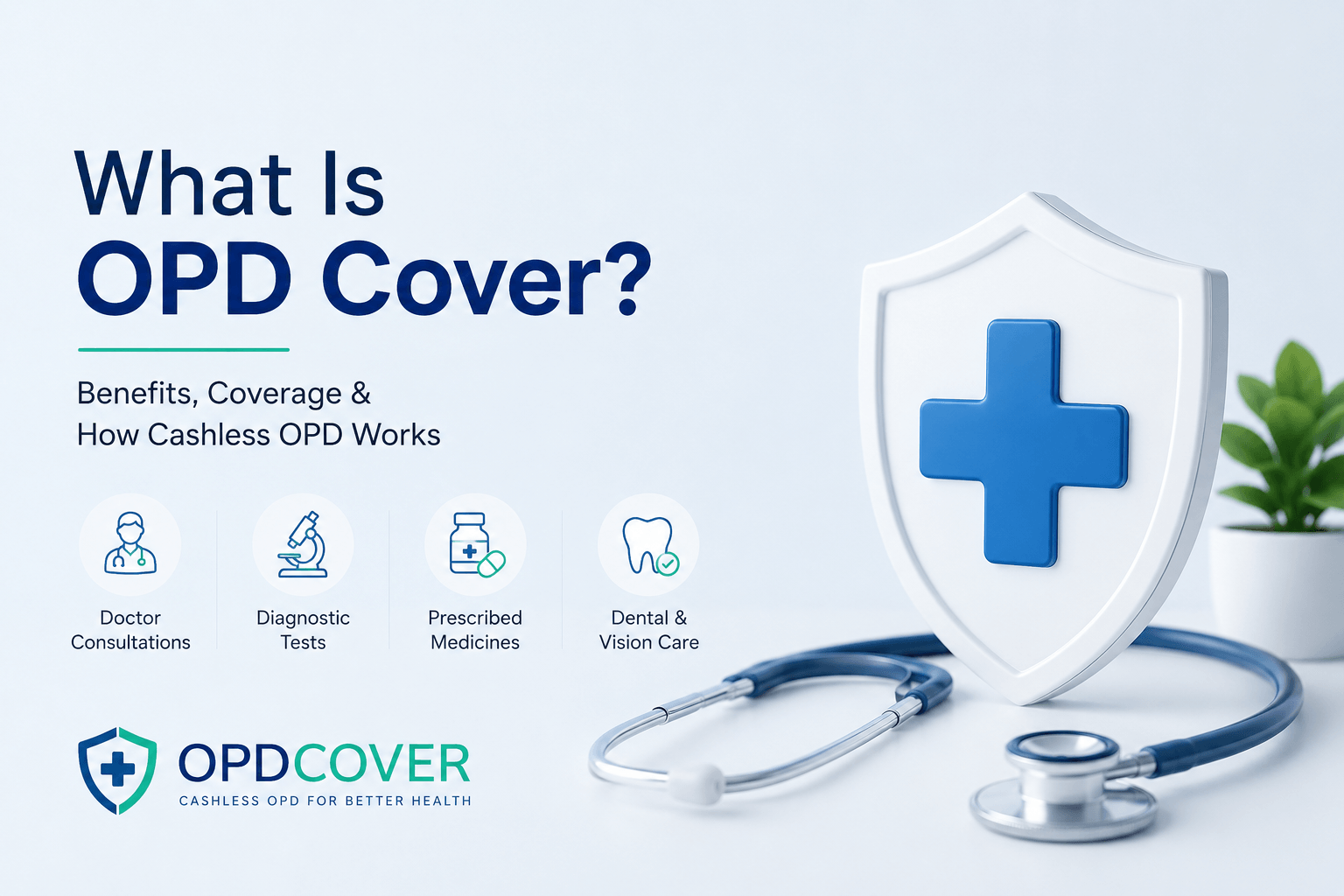
Healthcare expenses are not limited to hospitalisation. A large part of our healthcare spending comes from everyday medical needs such as doctor consultations, blood tests, diagnostic procedures, medicines and routine check-ups.
This is where OPD cover can be useful.
OPD stands for Outpatient Department. OPD cover is designed to help with eligible medical expenses when you receive treatment without being admitted to a hospital.
Unlike hospitalisation insurance, where coverage is generally focused on expenses related to being admitted to a hospital, OPD cover focuses on the everyday healthcare services people use more frequently.
What Does OPD Cover Usually Include?
The exact benefits depend on the plan, but OPD coverage can include several common healthcare expenses.
1. Doctor Consultations
OPD cover can help with eligible consultations with general physicians and specialists. Depending on the plan, consultations may be available at partner clinics or through online healthcare services.
Regular access to consultations can make it easier to seek medical advice instead of delaying a visit because of the cost.
2. Diagnostic Tests and Lab Services
Blood tests, imaging, ECGs and other diagnostic services can add up quickly, particularly when multiple tests are required.
A cashless OPD plan can provide access to eligible diagnostic services through its partner network, helping reduce the need to manage reimbursement paperwork.
3. Prescription Medicines
Many OPD plans provide benefits for prescribed medicines purchased through participating pharmacies.
This can be particularly useful for people who regularly require medicines following a consultation or diagnostic test.
4. Dental and Vision Check-ups
Depending on the plan, OPD benefits may also include routine dental and vision services.
For example, some OPD plans can provide benefits for dental check-ups or cleaning and routine eye examinations.
However, it is important to check the specific inclusions and exclusions of your plan before using the benefit.
5. Second Medical Opinions
Some comprehensive healthcare plans go beyond everyday OPD expenses and may provide access to specialist second opinions.
A second opinion can help you better understand a diagnosis or proposed treatment before making an important healthcare decision.
What Is Cashless OPD?
Cashless OPD means that eligible healthcare expenses can be settled directly between the healthcare provider and the service provider instead of requiring you to pay first and submit a reimbursement claim later.
For example, with OPDCover, members can visit a participating clinic, laboratory or pharmacy, show their membership card and have eligible expenses settled directly with the provider.
The basic process is simple:
1. Find a partner provider
Search for a participating clinic, laboratory, pharmacy or other healthcare provider in the network.
2. Show your card
Present your OPD card at the provider before making the payment.
3. Get the eligible service
The provider settles the eligible bill through the cashless process, so you don't have to maintain receipts and submit a reimbursement claim for covered services.
This can make routine healthcare more convenient and reduce the paperwork associated with traditional reimbursement processes.
OPD Cover vs Hospitalisation Insurance
One of the most important things to understand is that OPD cover and hospitalisation insurance are not the same thing.
| OPD Cover | Hospitalisation Insurance |
|---|---|
| Focuses on outpatient healthcare | Focuses primarily on hospitalisation |
| Doctor consultations | In-patient hospital treatment |
| Diagnostic tests | Eligible hospitalisation expenses |
| Prescribed medicines | Surgery and related hospital expenses |
| Routine healthcare services | Room, treatment and other eligible hospital expenses |
| Usually designed for day-to-day healthcare | Designed for major medical events |
OPD cover should therefore be viewed as a complement to appropriate health insurance rather than a replacement for hospitalisation coverage. OPDCover specifically states that hospitalisation is outside its OPD cover.
What Are the Benefits of OPD Cover?
Helps Manage Everyday Medical Expenses
Doctor visits, tests and medicines may seem like small expenses individually, but they can become significant over the course of a year.
OPD coverage can help manage these recurring healthcare costs.
Reduces Reimbursement Hassle
With a cashless network, eligible bills can be settled directly with participating providers.
This can eliminate the need to collect receipts and submit individual reimbursement claims for covered services.
Encourages Timely Healthcare
When routine consultations and diagnostic services are easier to access, people may be less likely to postpone medical attention because of out-of-pocket costs.
Convenient Access to a Healthcare Network
A network of clinics, laboratories and pharmacies can make it easier to find participating providers when you need healthcare services.
What Is Not Covered by OPD Cover?
Coverage varies between plans, so always read the terms and conditions before purchasing or using an OPD plan.
For example, OPDCover currently lists hospitalisation, cosmetic procedures, over-the-counter purchases, out-of-network visits and spectacles or lenses among its exclusions, subject to the plan terms.
Some alternative therapies may also be excluded unless specifically added to a plan.
Understanding exclusions is just as important as understanding the benefits.
Who Can Benefit From OPD Cover?
OPD coverage may be useful for people who regularly spend money on:
- Doctor consultations
- Diagnostic tests
- Prescription medicines
- Routine dental check-ups
- Vision check-ups
- Specialist consultations
- Follow-up healthcare visits
It can also be useful for families where multiple members have regular outpatient healthcare needs.
For employers, OPD benefits can also be offered as part of employee healthcare programs. OPDCover offers an OPD add-on alongside group medical and personal accident coverage for teams.
How to Choose an OPD Cover Plan
Before selecting an OPD plan, consider these factors:
Check the Annual OPD Limit
Look at the maximum amount available for eligible OPD expenses during the policy or membership year.
Check What Services Are Included
Confirm whether consultations, diagnostics, pharmacy, dental, vision and other services are included.
Understand the Network
Check whether the plan has participating healthcare providers in your city and near locations you commonly visit.
Look at the Cashless Process
A straightforward cashless process can make a significant difference to your experience.
Read the Exclusions
Don't choose a plan based only on its headline benefits. Understand what is specifically excluded.
Check Family Benefits
If you're purchasing cover for your family, compare the number of members covered and the overall annual benefit available.
Is OPD Cover Worth It?
For people who frequently spend money on outpatient healthcare, OPD cover can be a practical way to manage routine medical expenses.
The value depends on your healthcare requirements, the plan's annual limits, network availability, covered services, exclusions and premium.
The most important thing is to choose coverage based on how you actually use healthcare rather than simply choosing the plan with the highest advertised limit.
Get Started With OPDCover
Everyday healthcare shouldn't have to involve complicated reimbursement paperwork.
OPDCover provides cashless access to eligible consultations, diagnostics and pharmacy services through its partner network, along with additional healthcare benefits depending on the plan.
If you are looking for a simpler way to manage routine healthcare expenses, explore OPDCover and check what coverage is available for you.
Important: OPD benefits and exclusions vary by plan. OPD cover is not a substitute for hospitalisation insurance. Always review the applicable plan terms, conditions and exclusions before purchasing.